Turn a site walk into a 3D record.
Gaussian splatting from video turns a site walk into a 3D record your team opens in a browser: a digital twin from phone video. TRACE works out where each frame was taken, then trains millions of small 3D Gaussians until their renders match those frames.
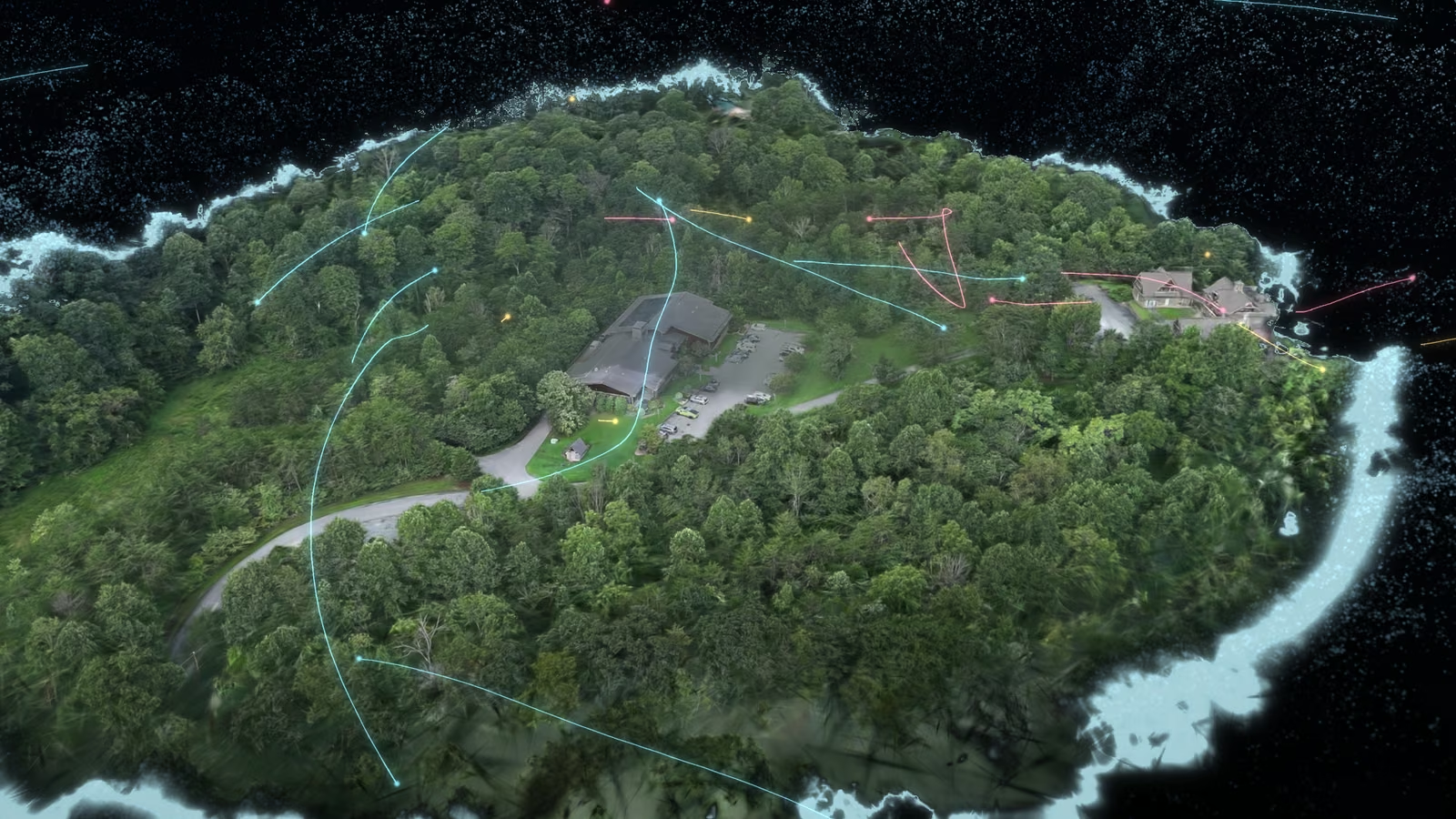
First position the images. Then learn the view.

TRACE selects sharp seed frames across the Visit’s clips and estimates their cameras with COLMAP/hglomap. It registers remaining keyframes against that map rather than treating a video as an unlocated stack of images.
LichtFeld trains the Gaussian reconstruction from placed views. The resulting Record carries its source lineage and quality measurements.
A render has to earn its score.

Evaluation images are withheld from optimization and scored after training. Record acceptance checks the split and reported per-view results; missing measurements block acceptance.
Carry the Record into the browser.

TRACE serves a verified SOG rendition of an accepted Record. Compression reduces the data required to deliver its Gaussian representation.
The warehouse export used 13.08 bytes per Gaussian. Device resources, export settings and scene content still determine what is practical to open.
Questions, answered.
Can I use a phone or action camera?
Yes. Walk steadily so neighbouring frames overlap, and keep the camera moving past each area.
Is a Gaussian splat a mesh?
No. A splat is made of millions of small 3D Gaussians that render the scene as filmed; a mesh is a connected surface of triangles.
Measurement receiptCapabilities JSONFor agents
Request early access